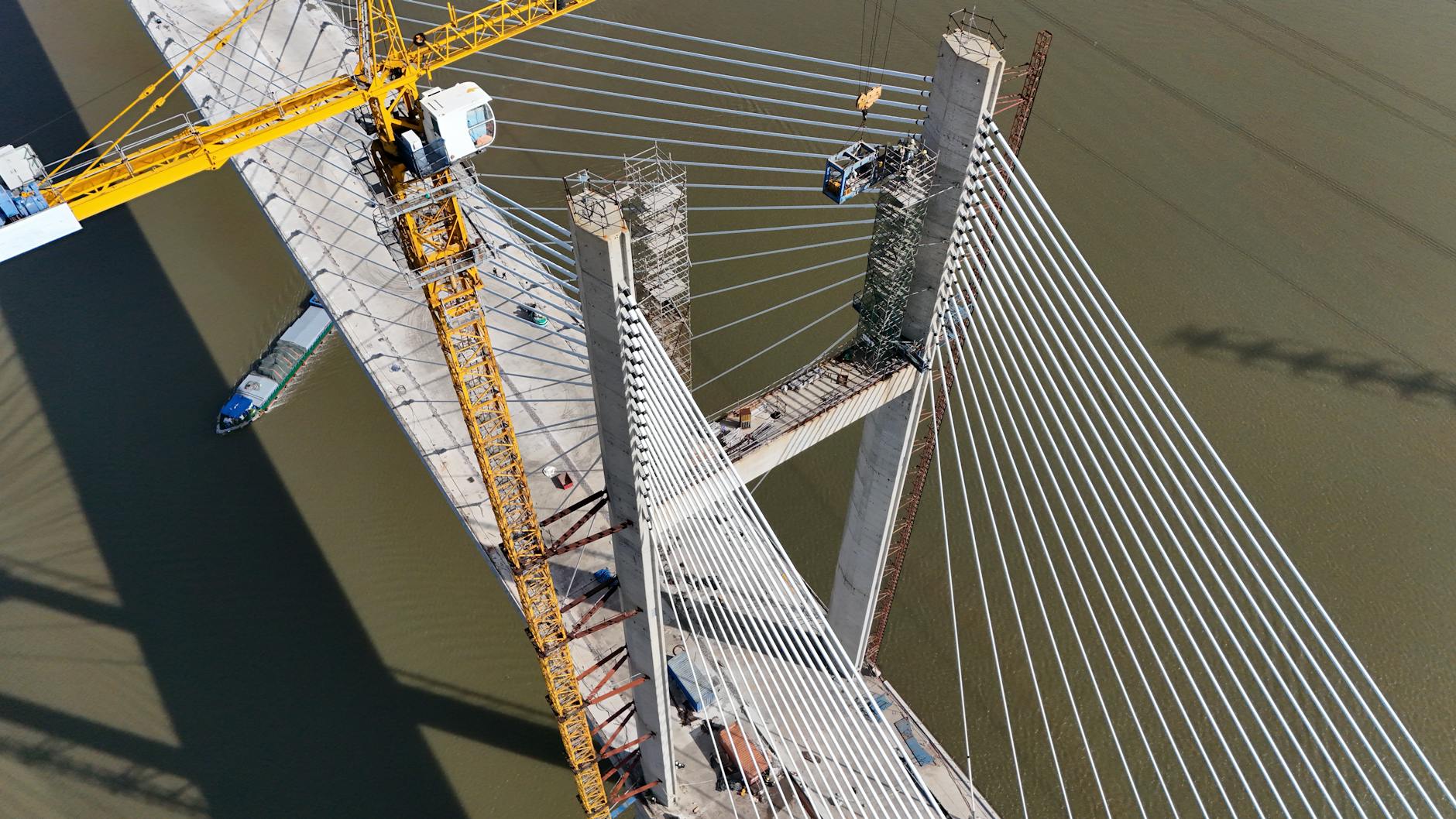
When a major infrastructure project stalls because key planning documents stay locked behind closed doors, the contractors and builders downstream don't get to pause. They still have to execute. That tension—between incomplete information and the pressure to deliver—sits at the heart of operational efficiency in construction today.
Right now, that tension is playing out in real time in Albury-Wodonga, Australia. Advocacy group Better Border Health formally requested documents supporting the Albury hospital redevelopment business plan, including current and forecasted demand data. NSW Health refused the request in full, citing cabinet confidentiality. As The Border Mail reported, BBH director Stan Stavros argued that a basic "pub test" — common-sense public accountability — should override bureaucratic secrecy on a project of this scale. For construction firms tied to that redevelopment, the lesson is immediate: you cannot let opaque planning processes become an excuse for operational paralysis.
WILL YOUR BUSINESS SURVIVE THE NEXT 5 YEARS?
Find out in 5 minutes. 15 questions. Confidential.
Why Execution Can't Wait for Perfect Information
The most efficient construction operations share one trait. They build decision-making frameworks that function even when upstream data is incomplete or delayed. Waiting for every document, every forecast, and every approval before mobilizing resources is a guaranteed path to cost overruns and missed milestones.
This is where financial literacy becomes a direct operational tool. Understanding the funding structures behind a project — government grants, infrastructure bonds, public-private financing mechanisms — lets a construction firm assess project viability independently, without relying solely on what a client or agency chooses to disclose. The Albury situation is a textbook case: contractors with strong financial program knowledge can read the signals, model their own demand scenarios, and position accordingly.
"In construction, the information you don't have is just as important as the information you do have. At Perez Digital Lifestyle, we focus on helping people understand the financial programs available to them so they can make confident decisions even when the picture isn't complete. Execution doesn't stop because a document is missing — smart operators build around the gap." — Raul Perez, Perez Digital Lifestyle
What Global Deal Activity Tells Construction Operators
Efficiency isn't just an on-site discipline. It's a capital discipline. India's technology sector just posted a striking data point that construction leaders should pay attention to. According to Grant Thornton Bharat's latest Technology Dealtracker, reported by Fortune India, India recorded 80 technology deals worth $2.5 billion in Q1 FY27, marking an 18% sequential increase in transaction volumes — the highest level in five quarters.
That rebound happened not because conditions were perfect, but because deal-makers maintained active pipelines and moved quickly when windows opened. Construction firms operate under the same capital logic. The contractors who access financial programs — SBA loans, bonding facilities, equipment financing, government-backed infrastructure grants — during stable periods are the ones positioned to execute aggressively when project volume spikes.
The Grant Thornton data also shows that deal values moderated due to fewer mega-acquisitions. Smaller, higher-volume transactions drove the growth. That mirrors what efficient construction operations look like on the ground: not one massive bet, but a disciplined portfolio of well-financed, well-scoped projects moving through the pipeline simultaneously.
New Leadership, New Materials, New Operational Leverage
Construction efficiency in 2026 increasingly depends on material science decisions made years upstream. That's why the appointment of Dr. Vikas Berry as Chief Executive Officer of Argo Graphene Solutions deserves attention from forward-thinking builders. As Barchart reported, Dr. Berry brings deep expertise in graphene applications — a material with significant implications for construction, including stronger, lighter composite materials and enhanced concrete additives that improve structural performance.
Operational efficiency isn't only about scheduling and procurement. It includes making early-stage material decisions that reduce rework, extend asset life, and lower long-term maintenance costs. Construction leaders who track emerging material technologies — and understand how to finance their adoption — build a compounding efficiency advantage over competitors still defaulting to legacy specifications.
The Operational Cost of Ignoring Environmental and Site Conditions
Efficiency also means confronting uncomfortable ground-level realities. A viral moment from Los Angeles this week made an unlikely point about infrastructure and environment. A KTLA weather reporter went viral after a flying cockroach climbed her body live on air — an incident that, as LifeZette covered, became a symbol of broader concerns about urban maintenance and environmental conditions in the city.
TO BE A DISRUPTOR, OR BE DISRUPTED — THAT IS THE QUESTION
"The 9th Disruption" — your free copy. Read it before your competition does.
For construction operators, the connection is direct. Job sites, renovation projects, and urban redevelopments regularly encounter pest infestations, environmental contamination, and deferred maintenance conditions that weren't disclosed in initial project documents. Efficient operators price these contingencies into their bids, build site assessment protocols into their pre-construction phase, and know exactly which financial programs cover environmental remediation costs. Surprises don't have to become losses when your operational framework anticipates them.
The Strategic Lesson From Long-Game Planning
Perhaps the deepest operational efficiency lesson this week comes from history. The Associated Press, via Mail Online, reported on former Israeli Prime Minister Ehud Barak reflecting on the 2000 withdrawal from Lebanon — a decision shaped by years of strategic drift and the absence of a clear exit framework. Barak's concern: that without deliberate planning, the same costly patterns repeat.
Construction projects fail the same way. Not in one dramatic moment, but through accumulated small decisions made without a coherent financial and operational framework. Scope creep, underfunded contingencies, and missed milestone triggers are all symptoms of the same root cause — starting execution without a complete understanding of the financial architecture supporting the project.
Frequently Asked Questions
What does operational efficiency mean in construction?
Operational efficiency in construction means completing projects on time and within budget by optimizing resource allocation, procurement, scheduling, and financial planning. It includes knowing which financial programs are available to fund each project phase and building contingency frameworks for incomplete information or unexpected site conditions.
How do financial programs improve construction execution?
Financial programs — including SBA loans, government infrastructure grants, bonding facilities, and equipment financing — give construction firms the capital flexibility to mobilize quickly, cover contingencies, and maintain cash flow across multiple simultaneous projects. Understanding these programs before a project starts is a core operational efficiency practice.
Why should construction firms track emerging materials like graphene?
Emerging materials such as graphene composites can reduce structural weight, increase durability, and lower long-term maintenance costs. Early adoption, when supported by appropriate financing, creates a compounding cost and performance advantage over firms using legacy specifications.
How can construction operators handle incomplete project information?
Efficient operators build independent financial modeling capabilities so they can assess project viability without relying solely on client or government disclosures. They also maintain strong relationships with financial program advisors who can identify funding sources and risk mitigation tools that aren't visible from the project brief alone.
Your Next Step Toward Smarter Construction Execution
The construction firms that outperform in 2026 and beyond won't be the ones with the most information. They'll be the ones with the best systems for executing confidently when information is imperfect. At Perez Digital Lifestyle, Raul Perez works with construction professionals to build exactly that foundation — a working knowledge of financial programs that turns uncertainty into a manageable variable rather than a project-stopping obstacle. If you're ready to close the gap between what you know and what you can execute, that conversation starts here.