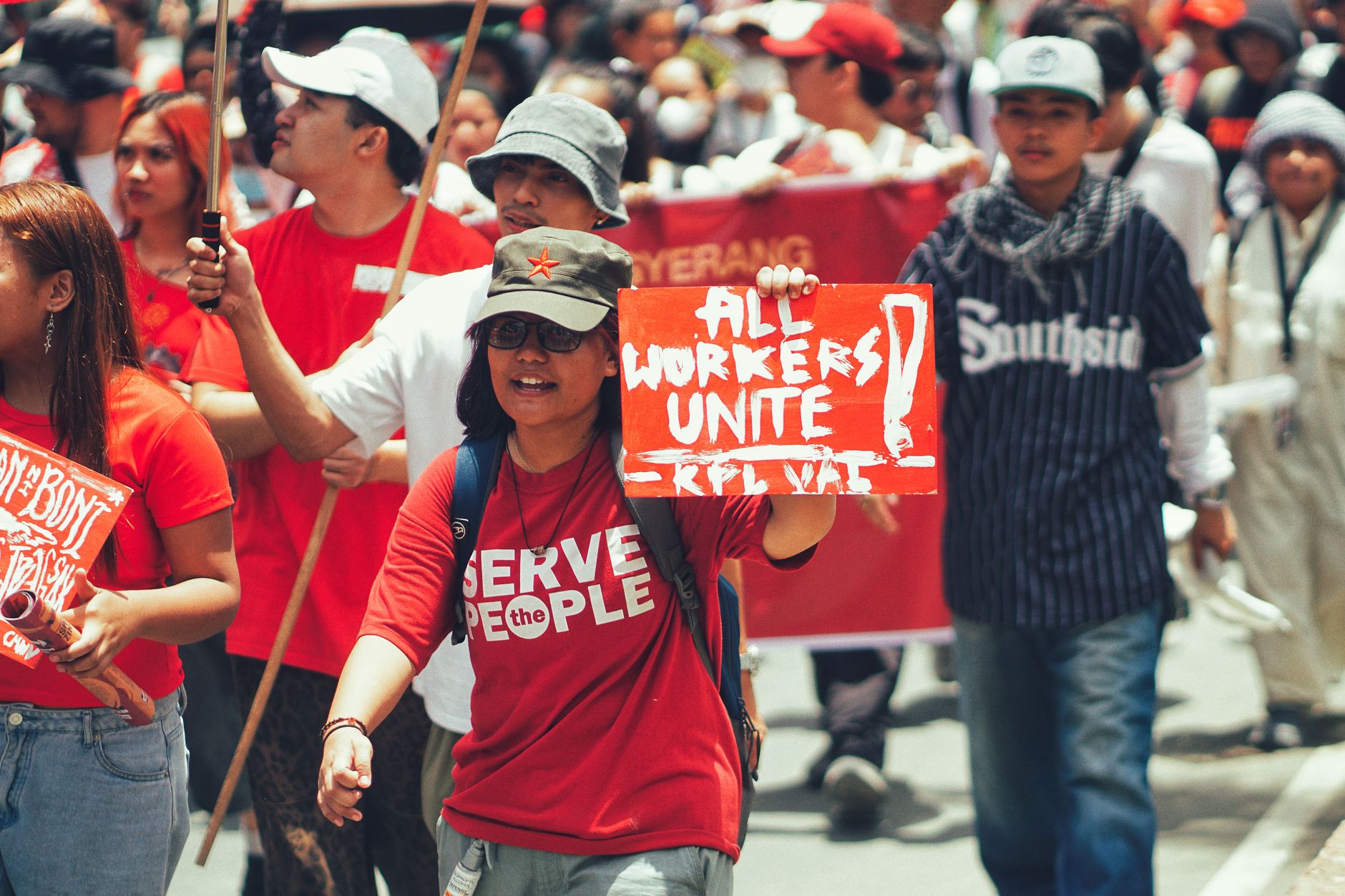
When thousands of young people camp on the streets of New Delhi demanding fairness in medical college entrance exams, healthcare leaders should pay close attention. Not because of the politics — but because of what the movement reveals about trust, transparency, and the human cost of systems that fail the people they are meant to serve.
At Marking, we believe healthcare is fundamentally a people business. Whether you are serving patients directly or supporting the professionals who do, the culture you build inside your organization shapes every outcome on the outside. The news this week — from protest camps in India to community hubs in rural Ireland — offers a powerful mirror for any healthcare leader willing to look.
WILL YOUR BUSINESS SURVIVE THE NEXT 5 YEARS?
Find out in 5 minutes. 15 questions. Confidential.
What Does a Healthcare Talent Crisis Actually Look Like?
India's so-called "Cockroach" protests began over alleged leaks in some of the country's most competitive entrance exams for medical colleges and government jobs. According to Narooma News, thousands of young protesters held sit-ins in New Delhi despite police crackdowns, and the movement has since expanded beyond exam grievances to draw professionals and citizens from across the country.
Read that again: a talent pipeline crisis became a national movement.
When the pathway into healthcare — through education, credentialing, or hiring — is perceived as broken or unfair, it does not just frustrate individuals. It erodes public confidence in the entire system. Healthcare leaders who dismiss this as someone else's problem are missing a critical signal. The next generation of nurses, physicians, and allied health professionals is watching how institutions behave. They are deciding, right now, whether healthcare is a system worth joining.
Building a culture that attracts and retains great talent starts with one non-negotiable: integrity in every process, from recruitment to promotion to recognition.
"In healthcare, trust is not a soft value — it is the foundation everything else is built on. When people feel the system is rigged against them, they stop giving their best, and patients ultimately feel that gap. At Marking, we are committed to making sure every person we work with — whether they are a patient or a professional — feels seen, valued, and supported." — Margaret Ajawin, Marking
Why Infrastructure Is a Healthcare Equity Issue
Access to care does not happen in a vacuum. It depends on roads, power, connectivity, and community investment. That is why the announcement that Nigeria's Federal Government has begun construction of a 1.5MW solar energy mini-grid in Pankshin, Plateau State matters to healthcare audiences. The Rural Electrification Agency confirmed this is part of a national rollout of 48 interconnected mini-grids across the country.
Reliable electricity is not a luxury for rural health facilities — it is a clinical necessity. Cold chain storage for vaccines, powered medical equipment, and safe lighting for nighttime deliveries all depend on stable power. When community infrastructure improves, healthcare access improves with it.
For healthcare leaders, this is a reminder that people-first culture extends beyond your four walls. Advocating for the communities your patients live in is part of the job. The organizations that understand this become trusted anchors in the neighborhoods they serve.
When Safety Fails: The Human Cost We Cannot Ignore
A devastating house fire in Jazan, Saudi Arabia, reportedly caused by a suspected electrical fault, claimed the lives of a mother and her four children. The father was rescued and transferred to intensive care. Tragedies like this one are a sobering reminder of what is at stake when safety systems — whether in homes, communities, or clinical settings — are neglected.
In healthcare, a culture of safety is not a compliance checkbox. It is a living commitment, renewed every shift, in every handoff, in every conversation between a caregiver and a patient. Leaders set that tone. When teams feel psychologically safe to raise concerns, report near-misses, and ask questions without fear, outcomes improve measurably.
The families affected by preventable tragedies — whether from infrastructure failures or clinical errors — deserve systems led by people who take that responsibility personally. Healthcare culture starts at the top, and it shows up in the smallest decisions every single day.
TO BE A DISRUPTOR, OR BE DISRUPTED — THAT IS THE QUESTION
"The 9th Disruption" — your free copy. Read it before your competition does.
Community-Centered Care: A Model Worth Building
In Rathmullan, Ireland, plans for a new community hub have received Part 8 planning approval, according to Donegal Daily. The proposed development will replace an existing community building and is now positioned to seek funding under the Rural Regeneration and Development Fund. Councillor Pauric McGarvey, who championed the project, called it a vital step for the area's future.
Community hubs and healthcare hubs share the same DNA: they exist to bring people together, reduce isolation, and create shared spaces where individuals feel they belong. For healthcare organizations operating in both B2B and B2C environments, the lesson is clear. The most effective care models are the ones that meet people where they are — geographically, emotionally, and culturally.
Meanwhile, TheJournal.ie reported this week that forensic investigators have begun examining the remains of 99 children found at the Tuam mother and baby home in Ireland — a sobering chapter in the long reckoning with institutional care failures. It is a powerful reminder that healthcare and social care institutions carry profound moral weight. The communities they serve remember everything.
Building the Healthcare Culture That People Deserve
What connects a protest in New Delhi, a solar grid in Plateau State, a tragedy in Jazan, and a community hub in Donegal? People trying to build something better — and leaders deciding whether to listen.
At Marking, the work is grounded in a simple belief: healthcare organizations that invest in their people, honor their communities, and lead with empathy will always outperform those that do not. Culture is not a perk. It is a clinical strategy.
Here is what people-first healthcare leadership looks like in practice:
- Transparent talent pipelines — fair hiring, clear advancement, and honest feedback at every level
- Psychological safety — teams that can speak up without fear create safer patient environments
- Community investment — advocating for the infrastructure and resources your patients depend on
- Accountability without shame — learning from failures openly, because the alternative costs lives
- Belonging by design — building spaces, digital and physical, where every person feels included
Frequently Asked Questions
How does organizational culture affect patient outcomes in healthcare?
Research consistently links positive workplace culture — including psychological safety, clear communication, and staff wellbeing — to lower rates of medical error and higher patient satisfaction. When healthcare teams feel supported, they perform better under pressure. Culture is not separate from clinical quality; it drives it.
What is people-first leadership in a healthcare context?
People-first leadership in healthcare means prioritizing the wellbeing, development, and dignity of both staff and patients in every decision. It involves transparent communication, equitable processes, and a genuine commitment to listening before acting. Leaders who practice this approach build organizations that are more resilient and more trusted.
Why is healthcare talent retention a growing challenge?
Healthcare professionals increasingly report burnout, lack of recognition, and limited growth opportunities as reasons for leaving their roles. When talent pipelines are also perceived as unfair — as seen in India's medical exam protests — the problem compounds. Retention improves when organizations invest in culture, not just compensation.
How can small healthcare organizations build strong community trust?
Small healthcare organizations build community trust through consistent presence, honest communication, and genuine investment in local wellbeing. Showing up beyond clinical encounters — supporting community initiatives, advocating for infrastructure, and listening to patient feedback — signals that the organization sees people as more than transactions.
Your Next Step
If this post resonated with you, it is because you already know that healthcare leadership is about more than operations — it is about people. At Marking, we help healthcare organizations tell that story clearly and compellingly, reaching both the professionals and patients who need to hear it. Explore how a people-first content strategy can strengthen your brand, deepen community trust, and attract the talent your organization deserves. The conversation starts with a simple question: what do you want the people you serve to feel when they encounter your organization?