
Leadership is not a title. It is a decision—made daily, under pressure, with real consequences for real people. And right now, across four continents, leaders are making moves that small business owners and entrepreneurs cannot afford to ignore. The patterns emerging from government halls, sports federations, corporate boardrooms, and community marathons all point to one undeniable truth: the leaders who win are the ones who rebuild deliberately, develop talent relentlessly, and anchor everything in measurable impact.
If you are building a business in 2026, these are not distant news stories. They are your playbook.
What Does It Mean to Lead a Turnaround?
Effective turnaround leadership requires a clear philosophy, not just a to-do list. Nigeria's Imo State is demonstrating this at scale. Governor Hope Uzodimma's administration has structured its entire governance model around the 3R Agenda: Reconstruction, Rehabilitation, and Recovery. According to TheTimes.com.ng, the initiative is rebuilding neglected roads, reviving public institutions, and repositioning the state's economy with intentional sequencing—not reactive patching.
.png)
That sequencing is the lesson. Reconstruction comes first because infrastructure enables everything else. Rehabilitation restores the systems people depend on. Recovery is the outcome that follows disciplined execution of the first two. Every entrepreneur running a struggling team, a stalled revenue model, or a brand in need of repositioning can map this exact framework onto their own operation.
Contrast that with what a FrontPage Africa investigation uncovered in Monrovia, Liberia, where sections of the city's historic City Hall have fallen into significant disrepair. The Monrovia City Corporation acknowledges the deterioration while pointing to inherited conditions. The distinction between these two stories is not resources. It is response architecture. One leader built a framework and executed it. The other inherited a problem and has yet to close the gap between acknowledgment and action.
For entrepreneurs, this is a mirror moment. When you inherit a broken process, a disengaged team, or a client relationship in decline, the question is not who caused it. The question is: do you have a structured recovery philosophy, or are you improvising?
How Do You Develop Talent That Performs on a Global Stage?
Talent development is not a one-time investment. It is a continuous system. India's para-sports ecosystem is proving this. Asian News International reports that Yogesh Sharma (Shelly), Director of Para Athlete Development at the Paralympic Committee of India, recently met with Russian Paralympic Committee President Pavel Alekseevich Rozhkov to advance international collaboration, structured training pathways, and global exposure opportunities for para athletes.
.png)
Notice the structure: domestic development plus international exposure plus institutional collaboration. No single element is sufficient alone. Entrepreneurs who only invest in internal training without exposing their teams to external benchmarks create insular cultures. Leaders who chase external partnerships without building internal capability create dependency. The winning formula combines both.
This is precisely the culture-building work that separates good managers from transformational leaders. Your team's ceiling is largely determined by the development systems you build around them—not just their raw talent.
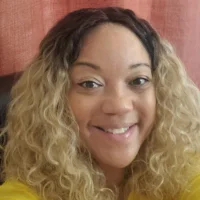
"The entrepreneurs I work with who scale fastest are not the ones with the most resources—they are the ones who treat talent development as a non-negotiable operating system, not an afterthought. When you build people intentionally, you build a business that outlasts any single strategy or market shift." — Erika Neal, Vanguard AI Solutions
What Makes a Leader Worth Watching? Recognition Backed by Results
In Sweden, Axel Berntsson, President and CEO of Bulten AB, was named to the prestigious Future Top Executives 2026 list, a joint recognition by Dagens industri and consulting firm Bain & Company. According to FinanzNachrichten.de, Berntsson was selected from a field identified by Sweden's leading executive search firms as most likely to ascend to top management of major corporations within three to five years—specifically because he initiated a powerful transformation since joining Bulten.
.png)
The signal here is critical: recognition followed transformation, it did not precede it. Berntsson did not receive a future leadership designation because of potential alone. He earned it by executing visible, measurable change first.
For small business owners building their personal brand and market authority, this is the sequence that matters. Results create reputation. Reputation creates opportunity. Opportunity creates scale. Shortcuts in that chain produce fragile authority that collapses under scrutiny.
How Can a Business Create Community Impact at Scale?
Leadership culture extends beyond the walls of your business. The CRDB Bank International Marathon in Tanzania has raised more than Sh5 billion since its 2020 launch, supporting healthcare, youth empowerment, and community development across the country. The seventh edition, held at Posta Grounds in Dar es Salaam, drew approximately 17,000 participants under the theme Kasi Isambazayo Tabasamu—a Swahili phrase that translates to speed spreading smiles. The Citizen reports that CRDB Bank Group has transformed what began as a sporting event into a major social impact initiative.
This is the culture of leadership made visible. CRDB did not separate its brand from its community mission. It fused them. Entrepreneurs who build businesses that serve their communities—not just their revenue targets—create loyalty that no marketing budget can manufacture.
.png)
The lesson is not to host a marathon. The lesson is to identify the intersection between what your business does best and what your community needs most, then build a repeatable initiative around that intersection.
FAQ: Leadership, Talent, and Culture for Entrepreneurs
What is the 3R framework and how can entrepreneurs apply it?
The 3R framework—Reconstruction, Rehabilitation, and Recovery—was developed as a governing philosophy by Imo State's administration. Entrepreneurs can apply it by first rebuilding foundational systems (operations, team structure), then rehabilitating underperforming areas (client relationships, processes), and finally driving recovery through consistent execution and measurement.
How do high-performing leaders develop talent on a limited budget?
High-performing leaders prioritize structured development pathways over sporadic training events. As seen in India's para-sports model, combining internal skill-building with external exposure and strategic partnerships produces athletes—and employees—who perform at a higher level than isolated development ever could.
Why does leadership recognition matter for small business credibility?
Recognition from credible third parties—like Bain & Company's Future Top Executives list—signals validated transformation, not self-promotion. For small business owners, earning industry recognition through demonstrated results builds the kind of authority that attracts clients, partners, and opportunities organically.
.png)
How can a small business build community impact without a large budget?
Start with consistency over scale. CRDB Bank's marathon began as a single event and grew to Sh5 billion in community impact over seven years. Identify one community need aligned with your business values and build a repeatable initiative around it. Compounding impact over time creates far more credibility than one large, isolated gesture.
Your Next Leadership Move Starts Here
The leaders making headlines today—from Imo State to Stockholm to Dar es Salaam—share one common thread: they built systems, developed people, and executed with discipline. That is not a government strategy or a corporate luxury. It is the operating model available to every entrepreneur willing to lead with intention.
At Vanguard AI Solutions, Erika Neal works with entrepreneurs who are ready to stop reacting and start building—using the Midas platform at midas.ceo as a catalyst for structured, scalable entrepreneurial growth. If you are ready to apply a real leadership framework to your business and build something that creates lasting financial independence, explore what Midas makes possible for operators at your stage.