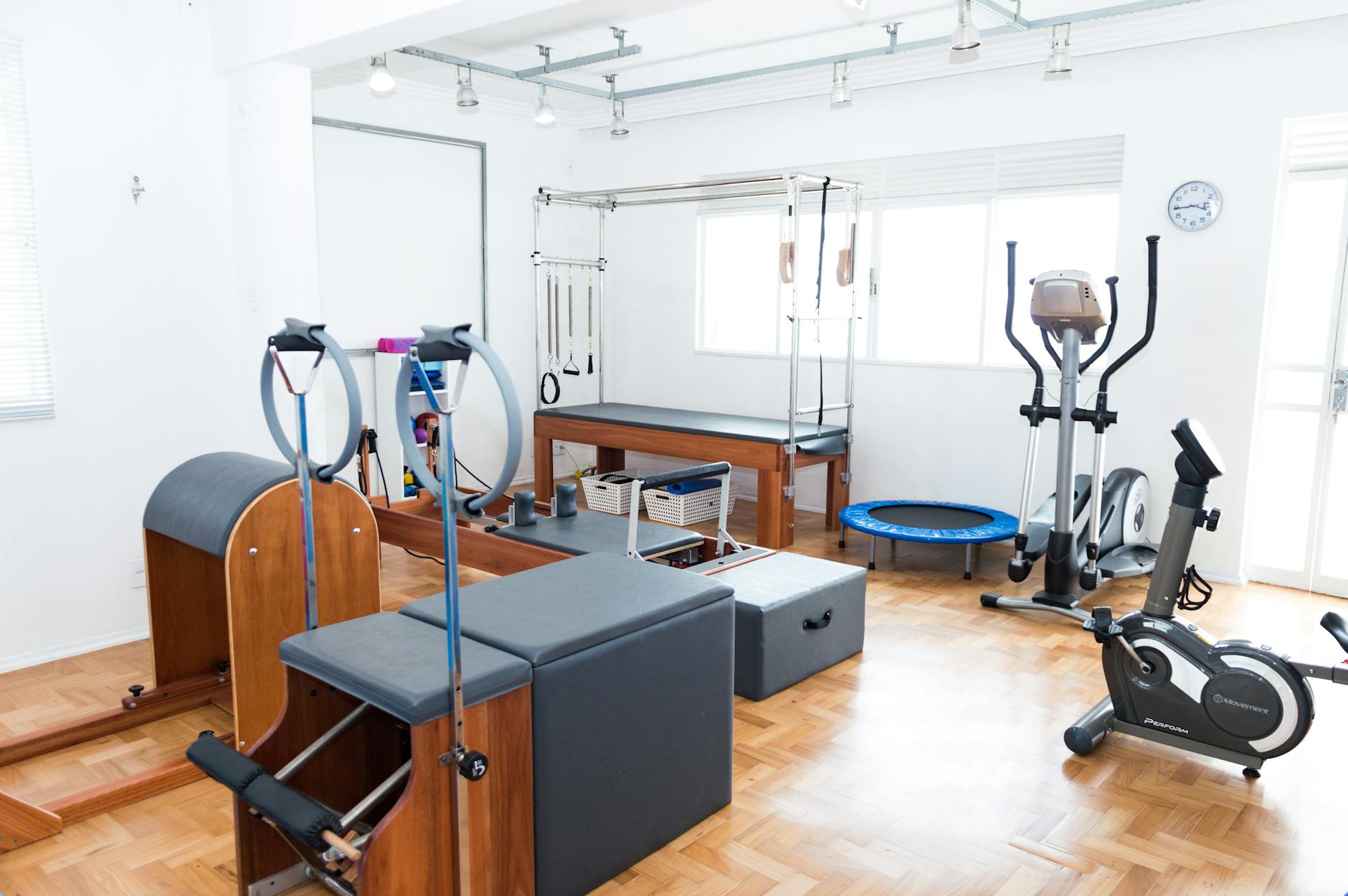
Every physical therapist has felt it — that moment when the right tool simply isn't there. A patient needs gait training support, a clinician reaches for an aide that should be standard equipment, and the gap between what care could look like and what it does look like becomes painfully clear. That gap is not a small inconvenience. It is a patient safety issue, a staff injury risk, and a direct threat to the quality of rehabilitation outcomes your facility promises to deliver.
That reality is playing out on a global scale right now. A recent report from Ghana's Public Accounts Committee sent a sharp message to government health authorities: teaching hospitals are being held back by inadequate funding, insufficient medical equipment, poor maintenance, and prolonged equipment downtime. The PAC's urgent call for re-tooling teaching hospitals is not just a developing-world problem — it is a mirror held up to every healthcare system that has allowed equipment quality to lag behind clinical demand.
WILL YOUR BUSINESS SURVIVE THE NEXT 5 YEARS?
Find out in 5 minutes. 15 questions. Confidential.
What Does Equipment Quality Actually Mean for Rehabilitation?
In physical therapy and gait rehabilitation specifically, equipment quality means more than whether a device is present. It means whether that device actively supports the clinician's ability to deliver safe, effective, participatory care — without putting the therapist's own body at risk in the process.
Rehabilitation professionals working in hospitals, nursing homes, specialty rehab centers, assisted living facilities, and home health settings face a consistent challenge: gait training requires hands-on physical support of patients who may be unstable, post-surgical, neurologically impaired, or deconditioned. Without the right assistive aides, clinicians absorb enormous physical strain. Workplace musculoskeletal injuries among physical therapy staff remain a significant occupational hazard — a cost measured in lost workdays, staff turnover, and ultimately, reduced patient access to care.
The Ghana PAC findings underscore a principle that applies universally: weak technical capacity and equipment downtime do not just inconvenience staff. They degrade the entire patient experience from the first moment of contact through discharge.
How Global Workforce Trends Are Reshaping Rehab Staffing
Equipment gaps do not exist in isolation. They intersect directly with workforce challenges that are reshaping healthcare delivery worldwide. The Netherlands recently announced a national Talent Strategy for Future Prosperity, actively recruiting skilled migrant workers in AI and biotechnology to sustain labor productivity growth. The underlying logic — that workforce capability drives service quality — applies directly to rehabilitation settings.
When skilled rehabilitation professionals are scarce, every tool that reduces physical burden on existing staff becomes exponentially more valuable. A gait training aide that allows one clinician to safely support a patient who might otherwise require two staff members is not just an efficiency gain. It is a force multiplier for your entire care delivery model.
This is precisely the operational philosophy that drives Gait Buddy LLC's approach to rehabilitation equipment design.
"When I think about what rehabilitation professionals face every single shift — supporting patients who are working hard to regain their independence while managing their own physical safety — I know the right equipment isn't a luxury, it's the foundation of good care. At Gait Buddy, we build tools that let clinicians focus on their patients, not on protecting their own backs. That's how you deliver the kind of service quality that patients remember and facilities can be proud of."
— Dale Boudreaux, Founder, Gait Buddy LLC
What Military-Grade Coordination Teaches Us About Rehab Readiness
On July 13, 2026, the United Nations Interim Security Force for Abyei coordinated a joint emergency medical rescue drill between Chinese peacekeeping forces and Ghana's Level-II Hospital. The drill covered the full operational chain — aerial search, patient extraction, triage, and clinical handoff — with every team member and every piece of equipment performing a defined role under pressure.
That level of operational readiness does not happen by accident. It requires equipment that works, staff who are trained on that equipment, and systems designed for real-world conditions — not ideal ones.
Rehabilitation facilities can draw a direct lesson here. Gait training readiness means your equipment is available, functional, and matched to the clinical demands of your patient population. It means your staff can execute safe patient handling without improvising around broken or absent tools. Mission readiness in rehabilitation is patient safety. Full stop.
The Hidden Cost of "Good Enough" Equipment
Healthcare facilities often defer equipment upgrades under budget pressure, accepting a "good enough" standard that quietly erodes service quality over time. The Ghana PAC findings documented exactly this pattern — prolonged equipment downtime becoming normalized until the cumulative impact on care delivery became impossible to ignore.
TO BE A DISRUPTOR, OR BE DISRUPTED — THAT IS THE QUESTION
"The 9th Disruption" — your free copy. Read it before your competition does.
In rehabilitation specifically, the costs of substandard gait training equipment are measurable. Staff injuries increase. Patient falls during therapy sessions carry liability and recovery setbacks. Therapy sessions take longer when clinicians are compensating for inadequate support tools. Patient confidence in their recovery — a documented factor in rehabilitation outcomes — is shaped in part by how competent and well-equipped their care team appears.
Sustainable healthcare investment, much like the long-term asset thinking being applied to ocean economy models in Portugal, requires recognizing that short-term underinvestment creates long-term systemic costs. Treating rehabilitation equipment as a depreciating line item rather than a core clinical asset is the same extractive logic — optimized for immediate savings at the expense of durable quality.
What Outpatient Clinics and Home Health Providers Should Know Right Now
The equipment quality conversation is not limited to large hospital systems. Outpatient clinics, home health agencies, and assisted living facilities face the same fundamental challenge at smaller scale — and often with fewer resources to absorb the consequences of equipment failures or staff injuries.
For home health providers in particular, the clinician is the equipment infrastructure. When a physical therapist enters a patient's home without adequate gait training support tools, they are managing patient safety and their own physical risk simultaneously, often without a second clinician present.
Investing in purpose-built rehabilitation aides designed for real clinical environments — across the full continuum from acute care hospitals to home settings — is one of the most direct actions a facility or agency can take to improve both staff retention and patient outcomes.
Frequently Asked Questions
Why does rehabilitation equipment quality directly affect patient outcomes?
Equipment that supports safe patient handling allows clinicians to focus fully on therapeutic technique and patient engagement. When staff are compensating for inadequate tools, attention is divided and the quality of the therapeutic interaction — which drives outcomes — is compromised. Studies consistently link active patient participation in gait training to faster functional recovery.
How does poor rehabilitation equipment affect physical therapy staff injury rates?
Physical therapists and rehabilitation aides face high rates of musculoskeletal injury, particularly in the lower back and shoulders, from manually supporting patients during gait training. Purpose-designed gait training aides reduce the biomechanical load on clinicians, directly lowering injury risk and reducing staff absenteeism and turnover.
What types of facilities benefit most from advanced gait training aides?
Any setting where patients require ambulation support benefits — including acute care hospitals, long-term care and skilled nursing facilities, specialty rehabilitation centers, assisted living facilities, outpatient clinics, and home health. The specific aide design may vary by setting, but the core benefit of reduced clinician strain and improved patient safety applies across all environments.
How should healthcare facilities evaluate rehabilitation equipment investments?
Evaluate on total cost of care impact: staff injury reduction, therapy session efficiency, patient fall rates during therapy, and staff retention. A device that prevents one staff injury or one patient fall typically justifies its cost many times over when full downstream costs are accounted for. Facilities should also assess equipment durability and maintenance requirements — downtime has real clinical costs, as the Ghana PAC findings illustrate.
The evidence is consistent across geographies and care settings: rehabilitation service quality rises or falls on the tools clinicians have available and the degree to which those tools protect both patient and provider. Gait Buddy LLC was built on that conviction — that superior rehabilitation aides are not an upgrade, they are the standard of care your patients and your staff deserve. If you are evaluating gait training equipment for your facility, home health agency, or personal rehabilitation program, explore what purpose-built design actually looks like in practice at gaitbuddy.com.