
When a cyberattack exposes patient data and a biotech company presents groundbreaking oncology research at a global conference in the same week, one question surfaces immediately: who are the people making these decisions, and what kind of culture produced them? For healthcare operators like DocFizz Global, the answer to that question is not just philosophical — it is operational. The talent you recruit, the systems you trust, and the culture you build determine whether your organization becomes a headline for the right reasons or the wrong ones.
What Does a Cybersecurity Failure Reveal About Organizational Culture?
Leadership culture shows up in a crisis. This week, Edinburgh-based health tech firm Craneware disclosed that hackers had stolen a significant volume of customer and employee data in a targeted cyberattack. Craneware, which provides software to thousands of US hospitals, clinics, and pharmacies, is now managing both the technical breach and the trust breach that follows. These are two very different remediation projects.
WILL YOUR BUSINESS SURVIVE THE NEXT 5 YEARS?
Find out in 5 minutes. 15 questions. Confidential.
A cybersecurity incident is rarely just an IT failure. It is a systems-thinking failure — the kind that emerges when security culture is siloed rather than embedded across every team. In a healthcare organization, where HIPAA compliance and patient confidentiality are non-negotiable, every employee is effectively a security stakeholder. The Craneware breach is a data point, not an anomaly. It underscores why healthcare leaders must treat cybersecurity literacy as a core cultural competency, not a departmental checkbox.
For sole proprietors and small healthcare operators, this lesson is even more acute. You are simultaneously the CEO, the compliance officer, and the front-line decision-maker. Your culture is you.
How Is AI Reshaping the Talent Equation in Healthcare-Adjacent Fields?
Artificial intelligence is not replacing healthcare professionals — it is redefining what expertise looks like. This week, Clarivate announced that its RiskMark platform won the 2026 CODiE Award for Best AI Tool for Lawyers, recognized for transforming trademark risk assessment through machine intelligence. While the award targets legal professionals, the underlying dynamic maps directly onto healthcare: AI tools are raising the performance floor for every knowledge worker.
The talent implication is significant. Healthcare leaders who understand how to integrate AI into clinical and administrative workflows are building a durable competitive advantage. Those who resist or delay are not just falling behind technologically — they are falling behind culturally. The best candidates in healthcare increasingly want to work in environments where data-driven decision-making is the norm, not the exception.
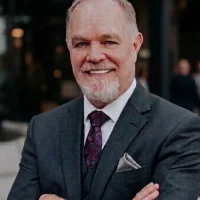
"In healthcare, the gap between good and great almost always comes down to the systems and people you invest in. At DocFizz Global, we believe that understanding the data — really understanding it — is what separates reactive operators from true leaders in this space. The technology is only as powerful as the culture that surrounds it." — Curt Ficenec, DocFizz Global
What Does Clinical Innovation Require From a Leadership Team?
Innovation does not happen in a vacuum. It requires a leadership culture that tolerates the long runway of clinical development, rewards intellectual rigor, and sustains momentum through years of uncertainty. Antengene Corporation's announcement this week illustrates this perfectly: the company will present Phase II clinical data on two oncology compounds — ATG-022, a Claudin 18.2 antibody-drug conjugate, and ATG-037, targeting solid tumors and hematological malignancies, at ESMO 2026.
Phase II trials represent years of accumulated scientific decision-making. Behind every poster presentation at a conference like ESMO is a team that maintained scientific discipline, regulatory focus, and organizational resilience through setbacks most outsiders never see. That is a leadership and culture story as much as a science story.
Similarly, Medtrum's progress toward the German launch of its 300U tubeless patch pump — a higher-capacity addition to the TouchCare Nano System for patients with greater insulin needs — reflects years of iterative engineering and regulatory navigation. The company's inclusion in Germany's statutory health insurance medical aids directory does not happen by accident. It happens because a team stayed aligned around a patient-centered mission through a complex, multi-year process.
TO BE A DISRUPTOR, OR BE DISRUPTED — THAT IS THE QUESTION
"The 9th Disruption" — your free copy. Read it before your competition does.
Why Does Medical Education Culture Predict the Future of Healthcare?
The talent pipeline for healthcare begins long before a clinician sees their first patient. In India, Infinity Learn by Sri Chaitanya reported strong student performance in NEET UG 2026, one of the world's most competitive medical entrance examinations. The platform's hybrid learning model — combining online instruction with in-person Sri Chaitanya Academy centers — produced measurable results in a high-stakes, high-volume testing environment.
What is instructive here is not just the outcome data. It is the model. Hybrid learning environments that blend structured rigor with flexible access are producing the next generation of clinical talent. Healthcare leaders who understand this trajectory can build better recruitment pipelines, design better onboarding programs, and create organizational cultures that resonate with how the next cohort of professionals actually learned.
For a sole proprietor in healthcare, this matters because your competitive advantage is not scale — it is agility and relationships. Knowing where the best-prepared talent is coming from, and what learning culture shaped them, gives you a structural edge in hiring and retention.
Frequently Asked Questions
How does cybersecurity culture affect healthcare organizations specifically?
Healthcare organizations handle sensitive patient data governed by regulations like HIPAA. A weak cybersecurity culture — where security is treated as an IT issue rather than an organizational responsibility — creates systemic vulnerability. The Craneware breach illustrates how a single incident can compromise both customer and employee data at scale, damaging trust that takes years to rebuild.
How is AI changing talent requirements in healthcare?
AI tools are raising baseline expectations for analytical capability across clinical and administrative roles. Healthcare professionals who can interpret AI-generated insights, identify their limitations, and integrate them into decision-making workflows are increasingly valuable. Organizations that build AI literacy into their culture attract stronger candidates and make better decisions faster.
What leadership qualities drive successful clinical innovation?
Successful clinical innovation requires leaders who sustain long-term scientific discipline, manage regulatory complexity without losing momentum, and keep teams aligned around patient outcomes through years of uncertainty. Companies like Antengene and Medtrum demonstrate that durable innovation is a culture product, not just a research product.
Why should sole proprietors in healthcare care about global healthcare trends?
Global trends in medical education, AI adoption, device innovation, and cybersecurity directly shape the competitive environment for every healthcare operator, regardless of size. Understanding these trends helps sole proprietors make smarter technology investments, anticipate patient expectations, and position their practice ahead of market shifts.
Your Next Step in Building a Leadership-First Healthcare Practice
The week's headlines share a common thread: every major development in healthcare — whether a cyberattack, an AI award, a Phase II trial, a device launch, or a medical education milestone — is ultimately a story about the people and culture behind it. At DocFizz Global, Curt Ficenec and the team work with healthcare operators who are serious about building practices grounded in data, trust, and genuine clinical value. If you are ready to think more systematically about the leadership culture inside your own healthcare operation, explore how DocFizz Global approaches the intersection of technology, talent, and patient-centered care.