
When a client walks through your door — or joins your video call — they carry invisible benchmarks. They've seen headlines about AI-powered consulting firms posting 21% operating margins. They've read about governments pooling resources to rebuild entire industries from the ground up. Whether they articulate it or not, those stories shape what they expect from every professional they hire. For firms like 124 LLC, that pressure isn't a threat — it's an invitation to lead.
This week's global business news offers a clear signal: the standard for professional service delivery is being rewritten in real time, and the firms that understand that shift will define the next era of client relationships.
WILL YOUR BUSINESS SURVIVE THE NEXT 5 YEARS?
Find out in 5 minutes. 15 questions. Confidential.
What Does Today's Global Business Climate Mean for Professional Services?
The short answer: clients expect more, faster, and with greater accountability. Cross-border partnerships, AI integration, and regulatory clarity are converging to raise the baseline for what "excellent service" actually looks like. Professional services firms that ignore these signals risk being outpaced — not by competitors down the street, but by the shifting expectations those global stories create.
When Governments Model Partnership, Clients Notice
On July 24, South Korea and the United States officially opened the Korea-US Shipbuilding Partnership Center in Washington, D.C. — a joint hub designed to revitalize American shipbuilding through investment, technology sharing, and workforce training under the MASGA initiative. Senior officials, lawmakers, and business executives from both countries attended the launch, signaling that even the most capital-intensive industries now see structured collaboration as the fastest path to capability-building.
For professional services providers, the lesson is direct. When two nations formalize a partnership to close a capability gap, they aren't just sharing resources — they're building trust through transparency and shared accountability. That's the same architecture that makes a client relationship durable. Structured collaboration, clear roles, and mutual investment in outcomes: these aren't just diplomatic virtues. They're service design principles.
AI Revenue Is Real — and It's Changing Client Expectations
Infosys, one of the world's largest IT and consulting firms, reported that AI-driven revenues reached 8.2% of total revenue in Q1 2026, with an operating margin of 21.1% and total revenues of $5.082 billion. CEO Salil Parekh noted that "AI momentum is now rapidly converting into revenue" — a phrase that should resonate with every professional services firm still treating AI as a future consideration.
This matters for client experience in a specific way. When enterprise clients see firms like Infosys converting AI investment into measurable margin improvement, they begin asking their own service providers the same question: How is technology making you better at serving me? The answer doesn't have to involve a billion-dollar AI platform. It can be as straightforward as faster turnaround, more accurate analysis, or proactive communication enabled by smarter workflows. The expectation is efficiency that shows up in the client's experience — not just on your balance sheet.
Cross-Border Deals Set a New Benchmark for Professionalism
Two additional stories from this week underscore how seriously the global market takes professional credibility. In Kenya, AXYS Investment Bank partnered with UK-based Janus Henderson Group to give local institutional and private investors access to offshore funds — joining a growing roster of offerings that include managers like BlackRock and Vanguard. The move reflects a sophisticated client base demanding access to global-quality products, not just local convenience.
Meanwhile, in Hong Kong, Global New Material International's cross-border acquisition was selected by the Hong Kong Department of Justice as a benchmark case in its Collection of Success Stories — a formal endorsement recognizing the firm's approach to international expansion as a model for others. In capital markets, being recognized by an official authority carries significant weight. In professional services, the equivalent is a client who refers you without being asked — because the experience was that good.
Both stories reinforce the same truth: the professionals who earn the most trust are those who hold themselves to a standard higher than what the market requires.
TO BE A DISRUPTOR, OR BE DISRUPTED — THAT IS THE QUESTION
"The 9th Disruption" — your free copy. Read it before your competition does.
Workforce Classification and Compliance Are Client Experience Issues Too
Not every service quality story involves global expansion or AI revenue. Some of the most consequential ones play out in tax tribunals. A recent ruling by India's Income Tax Appellate Tribunal (ITAT) in Cochin determined that administrative supervision over attendance and scheduling does not automatically create an employer-employee relationship, quashing a Rs 9.48 lakh tax demand against a coaching center that hired teachers on a contract basis.
For professional services firms managing contractors, freelancers, or specialist consultants, this ruling is a reminder that workforce structure has direct compliance implications. Getting it wrong doesn't just create legal exposure — it disrupts service delivery, damages professional reputation, and ultimately affects the client experience. Clean operations are the foundation of consistent service quality.
"The firms that clients keep coming back to aren't necessarily the biggest or the most tech-forward — they're the ones that make every interaction feel intentional and accountable. At 124 LLC, we believe that global trends in partnership and AI aren't abstract; they're a direct signal about what our clients are beginning to expect from us every single day. Staying ahead of that curve is how we protect the relationships we've built."
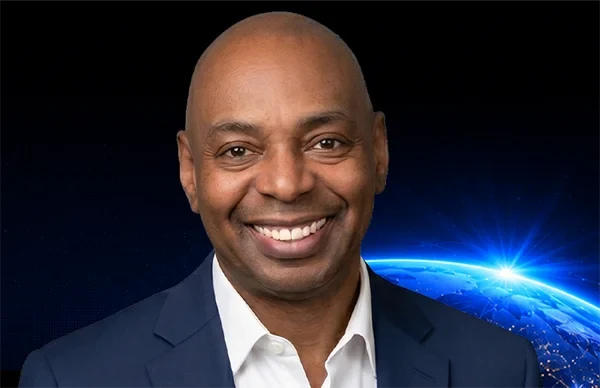
— Carl Humphrey, 124 LLC
Frequently Asked Questions
How does AI adoption affect client expectations in professional services?
As major firms like Infosys report measurable AI-driven revenue and efficiency gains, clients increasingly expect their professional service providers to use technology to improve speed, accuracy, and communication. The expectation isn't a specific tool — it's a visible improvement in how you serve them.
Why do global partnerships matter to small and mid-sized professional services firms?
Global deals — like the Korea-US Shipbuilding Partnership Center or the AXYS-Janus Henderson collaboration — set client expectations across industries. When clients see structured, accountable partnerships delivering results at scale, they apply the same standard to every firm they work with, regardless of size.
What is the connection between workforce classification compliance and service quality?
Misclassifying contractors or mismanaging compliance creates operational disruptions that directly affect clients. Clean workforce structures reduce legal risk and ensure consistent, reliable service delivery — both of which are core components of a strong client experience.
How can professional services firms use cross-border business trends to improve locally?
By tracking how global firms build trust — through transparency, formal accountability, and technology investment — local firms can adopt the same principles at their own scale. The tactics differ; the underlying service philosophy translates directly.
Your Next Step Toward Stronger Client Relationships
The global business stories this week aren't just headlines — they're a map of where client expectations are heading. From AI-powered efficiency to cross-border accountability to workforce compliance, every trend points toward one outcome: clients will reward the professionals who make them feel genuinely well-served. At 124 LLC, Carl Humphrey and the team are committed to translating these signals into practical, client-centered strategies. If you want to explore what raising your service standard looks like in your specific context, start that conversation with 124 LLC today.