
Whether you're running a daycare center in your community or scaling a small business from the ground up, the headlines this week share a surprisingly unified message: how you develop, retain, and lead your people is no longer a soft skill — it's a survival strategy. From tennis courts to police precincts, from regional economies to cabinet reshuffles, the world is loudly signaling that talent, mentorship, and organizational clarity are the defining factors of sustainable success.
At CamiCorp Consulting, we track these signals so you don't have to. Let's break down what's happening globally — and more importantly, what it means for your business right now.
WILL YOUR BUSINESS SURVIVE THE NEXT 5 YEARS?
Find out in 5 minutes. 15 questions. Confidential.
Loyalty Under Pressure: What Leadership Transitions Reveal About Culture
This week, UK Chancellor Rachel Reeves publicly backed Andy Burnham for prime minister — even amid reports she could be moved to a more junior cabinet role if he wins. Rather than retreat into self-preservation, she chose to publicly align with a broader vision. According to The Guardian, Reeves told the BBC she and Burnham were friends and did not rule out accepting a reduced position.
For small business owners and entrepreneurs, this moment is instructive. Organizational transitions — whether a leadership change, a restructure, or a shift in strategy — reveal the true health of your culture. When your team members prioritize the mission over their title, that's a sign of psychological safety and genuine alignment. When they don't, it's a signal that your culture may be running on compliance rather than commitment. The question every business leader should ask: if your role changed tomorrow, would your team hold together — or fracture?
When Talent Pushes Back: The Compensation Conversation You Can't Avoid
Top-ranked tennis players are escalating their protest over revenue-sharing at Wimbledon, promising to limit media commitments to just 15 minutes during the tournament's first week. The Manila Times reports that the players feel their current share of Wimbledon's revenue fails to reflect their actual contribution to the event's value.
This is a compensation equity story, and it's playing out in every industry — including early childhood education and small business. When your highest performers feel undervalued, they don't always quit immediately. Sometimes they quietly disengage, reduce their discretionary effort, or — like these athletes — organize. HR strategy isn't just about compliance and handbooks. It's about building a total rewards framework that communicates to your team: we see your value, and we reflect it. If you haven't reviewed your compensation structure recently, this is your sign.
Succession Planning Isn't Just for Corporations
In India, the BJP announced a sweeping reorganization of its Uttar Pradesh state unit ahead of the 2027 assembly elections, naming 19 vice-presidents and distributing leadership roles across a wide bench of talent. The Daily Jagran notes that all appointments were made through a structured consultation process with national leadership.
The lesson here isn't political — it's operational. Succession planning and structured leadership pipelines are not luxuries reserved for large organizations. For daycare centers and small businesses, the absence of a clear succession plan is one of the most overlooked operational risks. Who steps up if your lead teacher is out for six weeks? What happens to your client relationships if a key consultant leaves? Building a bench — even a small one — is how organizations of any size stay resilient. If your business can only run when you're in the room, you don't have a business; you have a job.
Mentorship as a Leadership Mandate
Perhaps the most direct signal this week came from Nigeria, where Akwa Ibom State's Commissioner of Police, CP Baba Mohammed Azare, delivered a powerful lecture urging senior officers to embrace mentorship as a fundamental leadership responsibility. New Telegraph reports that the Commissioner framed mentorship not as optional professional development, but as a critical tool for building the next generation of capable leaders.
TO BE A DISRUPTOR, OR BE DISRUPTED — THAT IS THE QUESTION
"The 9th Disruption" — your free copy. Read it before your competition does.
This resonates deeply with the work we do at CamiCorp. Mentorship is not a feel-good add-on — it is a performance strategy. In early childhood education settings, where staff burnout and turnover are persistent challenges, structured mentorship programs have been shown to improve retention, reduce onboarding costs, and elevate the quality of care. When experienced educators invest in newer team members, they're not just sharing knowledge — they're building the institutional memory and culture that keeps your organization strong.
"The organizations I see thriving — regardless of size or industry — are the ones that treat mentorship as a leadership expectation, not a personal favor. When you build that into your culture intentionally, you stop losing your best people to burnout and begin creating leaders from within. That's where real transformation happens."
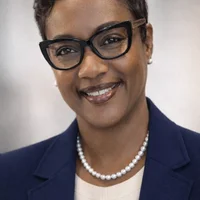
— Camilla Young, Founder, CamiCorp Consulting
Skills Gaps Are Local — and the Solution Starts With You
Finally, a compelling piece from the UK's northwest explores how regions like Cumbria are grappling with a persistent skills shortage — one driven largely by the assumption that ambitious people must leave to succeed. Place North West highlights that the cycle of talent leaving for larger cities has real consequences for local economies and organizations left behind.
This pattern is not unique to Cumbria. Many small businesses and early childhood education centers face the same quiet crisis: they invest in training staff, only to watch them move to larger organizations or markets that can offer more. The answer is not to compete on salary alone — it's to compete on culture, growth opportunity, and purpose. When your team feels they are growing, contributing, and valued, the pull of a bigger city or a larger employer diminishes. Workforce development is not an HR checkbox; it is your retention strategy.
The Bottom Line: Strategy Is People
This week's global headlines — from Wimbledon to West Africa to the UK cabinet — all circle back to the same core truth that drives everything we do at CamiCorp Consulting: your business strategy is only as strong as your people strategy. Whether you're navigating a leadership transition, closing a skills gap, building a mentorship culture, or designing compensation structures that reflect real value, every decision you make about your people is a strategic decision.
Small businesses and early childhood education leaders don't have the luxury of large HR departments or unlimited budgets. But you do have the ability to be intentional — and intentionality, backed by the right expertise, is what transforms organizations. That's not a platitude. That's the work.
Ready to build a people strategy that actually moves the needle? Connect with CamiCorp Consulting and let's get to work.