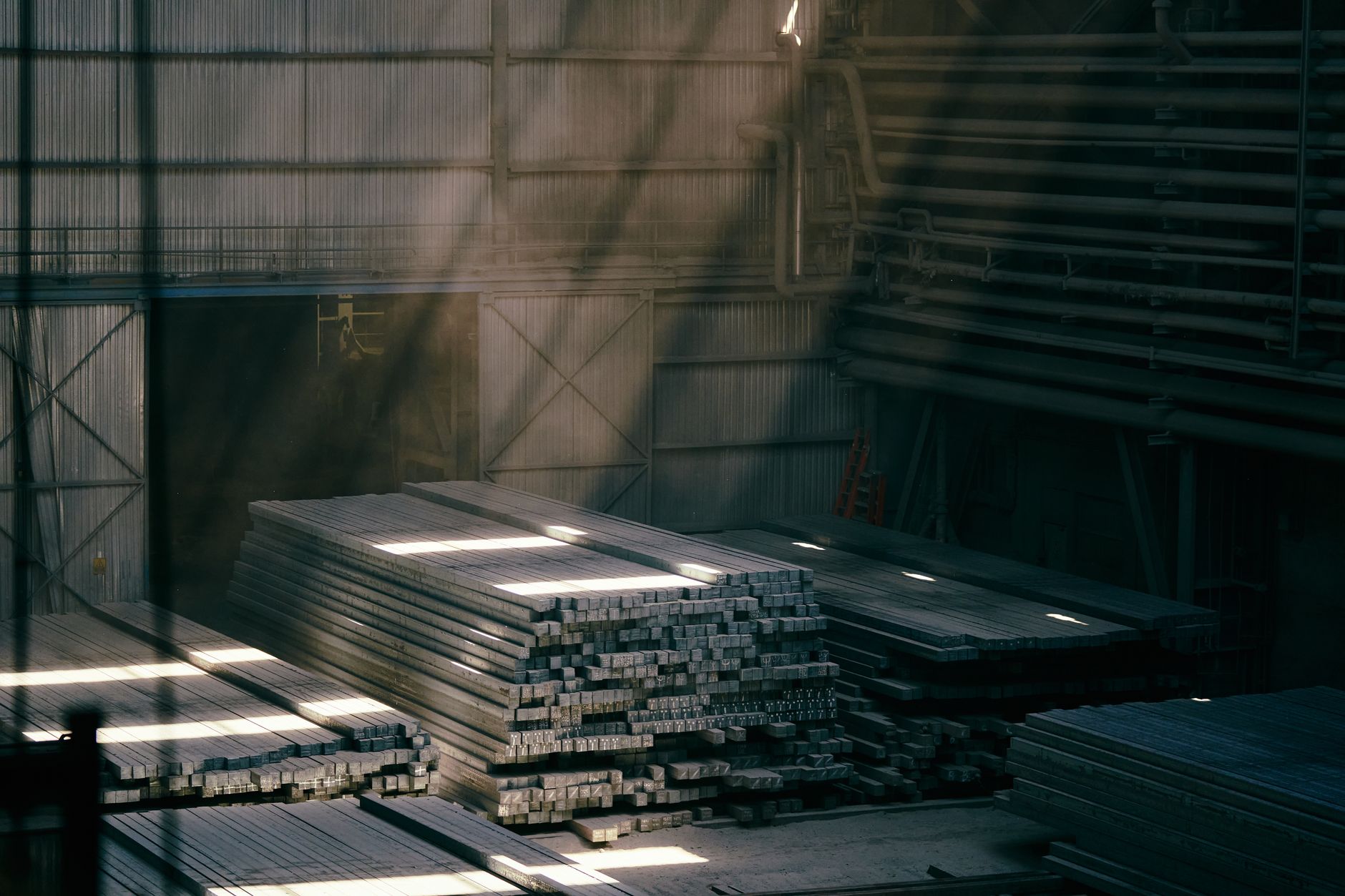
A $48 million write-down. A share price down 75 percent from its peak. A senior executive hired specifically to fix the problem — gone. Myer's national distribution centre (NDC) disaster at Ravenhall, Melbourne, is not just a headline. It is a precise, measurable case study in what happens when logistics infrastructure fails to deliver ROI at scale.
For B2B e-commerce operators, this story is required reading — not because Myer is a competitor, but because the failure pattern is universal. Warehouse automation, systems integration, and fulfilment infrastructure are among the highest-cost line items any product-based business will ever commit to. When those investments go wrong, the damage compounds fast: delayed orders, inventory inaccuracies, customer attrition, and executive instability. Myer is experiencing all four simultaneously.
What Exactly Went Wrong at Myer's Distribution Centre?
Myer's NDC at Ravenhall was designed to centralise and modernise its national fulfilment operation. Instead, it became a source of chronic disruption. According to reporting across The Daily Telegraph, The Herald Sun, and The Mercury, the retailer's share price collapsed 57 percent over the past year alone — a direct reflection of investor confidence evaporating as the fulfilment problems persisted without resolution.
.png)
The executive brought in to stabilise the situation has since departed, as confirmed by The Cairns Post and Townsville Bulletin. That detail matters enormously. It signals that the problem was not simply technical — it was structural, strategic, and deeply embedded in operational decision-making.
The core issue: a mismatch between the complexity of the automated system deployed and the organisation's readiness to operate it at full capacity. That gap has a very specific price tag. Forty-eight million dollars.
Why Does Warehouse ROI Fail So Predictably?
Warehouse automation projects fail for three compounding reasons. First, the total cost of ownership is systematically underestimated. Capital expenditure on conveyors, warehouse management systems (WMS), and robotics is visible. Change management, staff retraining, integration testing, and downtime costs are not — until they appear in a write-down.
Second, go-live timelines are almost always optimistic. A phased rollout that assumes linear progress rarely accounts for the non-linear reality of systems integration. When a WMS fails to communicate accurately with an ERP platform, every SKU in the building becomes a liability rather than an asset.
.png)
Third, success metrics are defined too late. If the KPIs for a new distribution centre are not locked in before a single conveyor belt is installed — pick accuracy rate, order cycle time, cost-per-unit-shipped, inventory shrinkage — there is no objective basis for declaring the system functional. Myer's situation suggests the goalposts kept moving, and accountability dissolved with them.
What Does This Mean for B2B E-Commerce Operations?
B2B e-commerce carries a different risk profile than consumer retail, but the logistics fundamentals are identical. Your buyers — whether procurement managers, resellers, or institutional clients — have zero tolerance for fulfilment errors. A missed delivery window in a B2B context does not just generate a refund request. It triggers a contract review.
At HM Care Global Services, this is exactly the kind of systemic risk that Mohamed Hamadache and his team evaluate before committing to any infrastructure change. The Myer case reinforces a discipline that separates operators who scale sustainably from those who absorb nine-figure losses.
.png)
"When we assess any logistics investment, the first question is never 'what does it cost to build?' — it's 'what does it cost if it doesn't work?' Myer's situation shows that the downside scenario has to be fully modelled before you commit a single dollar. In B2B, your clients don't absorb your operational failures — they leave." — Mohamed Hamadache, HM Care Global Services
That framing — modelling the downside before committing capital — is the analytical discipline that Myer's situation suggests was absent. A $48 million write-down is not a surprise event. It is the accumulated cost of decisions that lacked rigorous pre-commitment stress testing.
How Should B2B E-Commerce Operators Evaluate Fulfilment Infrastructure?
The answer is a structured ROI framework applied before, during, and after any logistics investment. Here is what that looks like in practice:
- Define baseline metrics first. Document your current cost-per-order, pick accuracy, order cycle time, and inventory accuracy rate before any new system is introduced. You cannot measure improvement without a verified baseline.
- Model three scenarios. Best case, expected case, and failure case. The failure case must include the cost of reverting to legacy processes, the reputational impact on client retention, and the leadership bandwidth consumed by crisis management.
- Stage your commitment. Pilot in one fulfilment zone before full rollout. Set objective go/no-go criteria for each phase transition. If the pilot does not hit its targets, the rollout does not proceed — regardless of sunk cost pressure.
- Assign clear accountability. Every metric must have a named owner. When accountability is diffuse, as appears to have been the case at Myer, problems persist longer than they should because no single person is empowered — or obligated — to escalate.
- Integrate your systems before you go live. WMS-to-ERP integration failures are the single most common cause of warehouse project overruns. Test every data handoff under load conditions that replicate your peak volume, not your average volume.
The Shareholder Value Equation
Myer's share price decline of 75 percent from its late-2024 peak is a shareholder value destruction event of the first order. For privately held B2B operators, the equivalent is client concentration risk. If your three largest clients represent 60 percent of revenue, and a fulfilment failure erodes their confidence, the valuation impact is structurally identical to a public share price collapse — just less visible until it is too late.
.png)
The lesson is not that automation is dangerous. It is that automation without measurement architecture, phased implementation, and pre-committed accountability structures destroys more value than it creates.
Frequently Asked Questions
What caused Myer's $48 million distribution centre loss?
Myer's national distribution centre at Ravenhall, Melbourne, experienced significant operational failures that resulted in a $48 million write-down. The issues involved systems integration problems, fulfilment disruptions, and an inability to operate the automated facility at intended capacity. The share price fell 57 percent over the past year as investor confidence deteriorated.
How does a warehouse failure affect B2B e-commerce specifically?
In B2B e-commerce, fulfilment failures directly threaten client contracts rather than individual transactions. Buyers operating on procurement schedules have low tolerance for delivery errors. A single systemic failure can trigger contract reviews, competitive tenders, and long-term client attrition that far exceeds the initial operational cost.
.png)
What metrics should B2B operators track for warehouse ROI?
The four core metrics are cost-per-order-shipped, pick accuracy rate, order cycle time (order placement to dispatch), and inventory accuracy rate. These must be measured at baseline before any new system is introduced and tracked continuously post-implementation to validate ROI claims.
How can B2B e-commerce businesses avoid large-scale logistics write-downs?
The most effective safeguard is a phased implementation model with objective go/no-go criteria at each stage transition. Combined with pre-committed accountability structures, realistic total cost of ownership modelling, and full WMS-ERP integration testing under peak load conditions, this approach significantly reduces the risk of large-scale capital write-downs.
Myer's $48 million lesson is available to every e-commerce operator willing to learn from it without paying the tuition. At HM Care Global Services, the analytical rigour applied to infrastructure decisions is what keeps B2B client relationships intact and operational costs predictable. If you are evaluating a logistics investment and want a framework for stress-testing the downside scenario before you commit, start with the questions Myer's board is now asking — just ask them first.