The convergence of artificial intelligence and automation is fundamentally transforming how industries operate, from defense manufacturing to renewable energy and workforce development. As organizations across sectors embrace intelligent systems to drive efficiency and innovation, SaaS leaders must understand these emerging patterns to position their platforms for the AI-powered economy ahead.
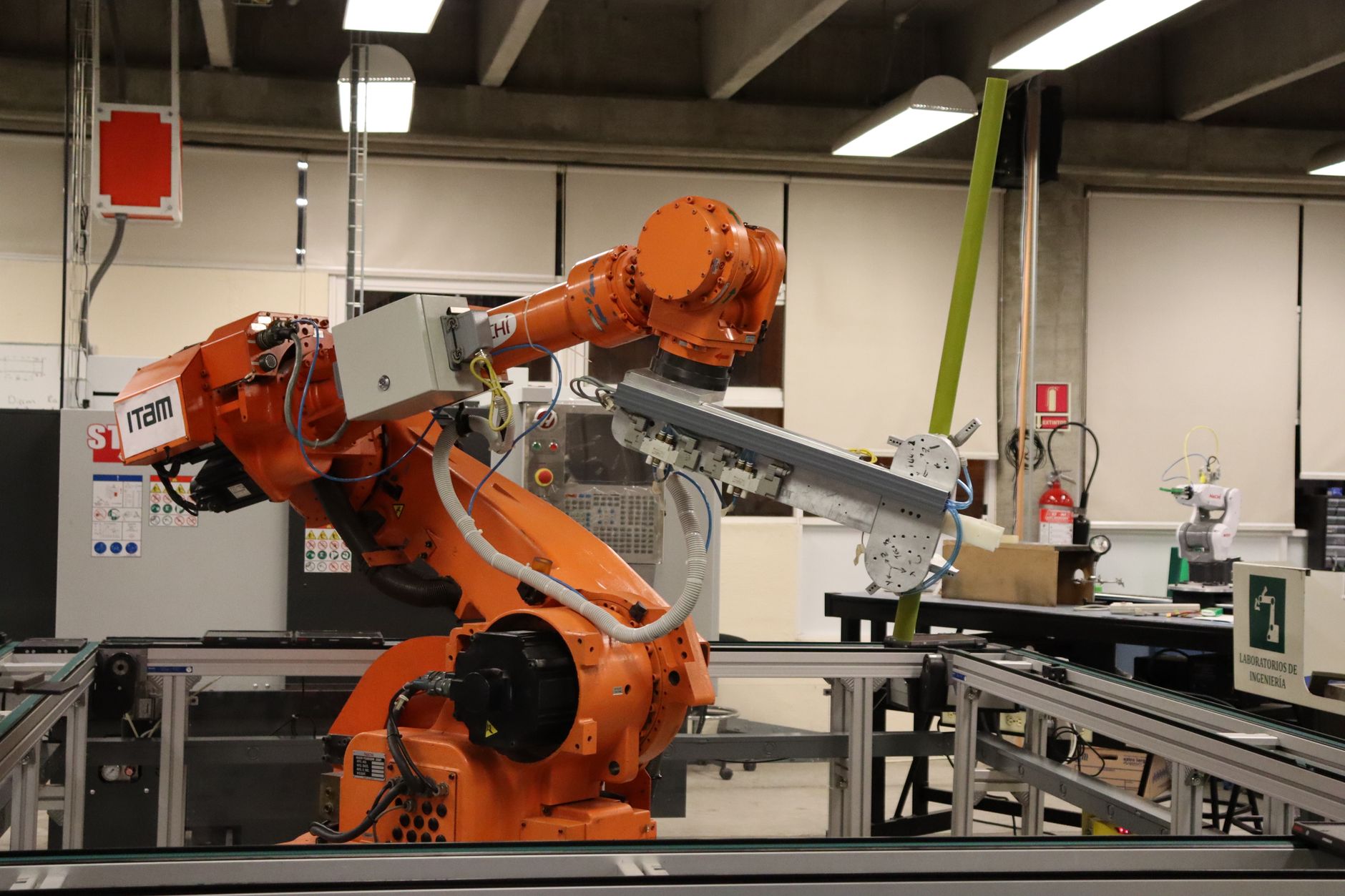
The scale of automation's impact becomes evident when examining Raytheon's latest manufacturing initiative. The defense contractor has deployed the largest robotic machine of its kind, designed to test missile components under extreme conditions within a chain-link enclosure spanning the length of a basketball court. This massive automation factory represents a paradigm shift toward intelligent manufacturing systems that can handle complex testing protocols without human intervention.
WILL YOUR BUSINESS SURVIVE THE NEXT 5 YEARS?
Find out in 5 minutes. 15 questions. Confidential.
Similarly, the renewable energy sector is witnessing unprecedented automation achievements. ScottishPower and Masdar recently set a UK record for the largest blade installation at their East Anglia THREE offshore windfarm, featuring 115-meter blades manufactured domestically. The £4 billion project will generate 1.4 GW of clean power for over 1.3 million homes, demonstrating how automated manufacturing and installation processes can scale renewable infrastructure rapidly.
These developments highlight a critical trend: industries are moving beyond simple automation toward composable, intelligent systems that can adapt to complex operational requirements. This shift mirrors the evolution happening in SaaS platforms, where modular architectures and AI-driven capabilities are becoming essential for competitive advantage.
"The future belongs to platforms that can intelligently orchestrate complex workflows while remaining flexible enough to adapt to changing business requirements. We're seeing this pattern across every industry we serve – from manufacturing to energy to professional services."
The workforce implications of this automation wave are equally significant. Cognizant's launch of Cognizant Skillspring™, an AI-native talent transformation platform, addresses the critical need for workforce AI readiness. The platform leverages multimodal learning approaches to help organizations achieve AI fluency, treating skilling as essential AI infrastructure investment rather than an afterthought.
This focus on human-AI collaboration represents a mature understanding of automation's role. Rather than replacing human workers, successful automation initiatives augment human capabilities while creating new skill requirements. For SaaS companies, this translates to designing platforms that empower users rather than replacing them, creating intuitive interfaces that leverage AI to enhance decision-making and productivity.
The restaurant industry provides another compelling example of intelligent automation's practical applications. As operators face declining traffic and rising costs, they're shifting from price increases to innovative cost controls and operational efficiency measures. This strategic pivot demonstrates how AI-driven analytics and automation can protect margins while maintaining customer satisfaction – a lesson directly applicable to SaaS pricing and feature optimization strategies.
The common thread across these diverse industries is the emergence of intelligent systems that can process complex data, make autonomous decisions, and adapt to changing conditions. For SaaS platforms, this evolution suggests several key opportunities:
Predictive Analytics Integration: Modern SaaS platforms must incorporate predictive capabilities that anticipate user needs and system requirements. Just as Raytheon's testing machines can simulate extreme conditions, SaaS platforms should predict and prevent potential issues before they impact users.
TO BE A DISRUPTOR, OR BE DISRUPTED, THAT IS THE QUESTION
"The 9th Disruption", your free copy. Read it before your competition does.
Modular Architecture: The concept of "composable weapons" in defense manufacturing mirrors the need for composable SaaS architectures. Platforms must offer modular components that can be configured and reconfigured to meet specific business requirements without extensive custom development.
Automated Optimization: The restaurant industry's focus on margin protection through operational efficiency highlights the importance of automated optimization features in SaaS platforms. These systems should continuously analyze usage patterns and automatically adjust resources and configurations for optimal performance.
Continuous Learning Systems: Cognizant's emphasis on outcome-based learning aligned with business objectives demonstrates the need for SaaS platforms that evolve with their users. Systems should learn from user behavior and automatically improve functionality and user experience over time.
The scale of investment in these automation initiatives – from Raytheon's factory-sized testing machines to ScottishPower's £4 billion windfarm – indicates that organizations are making substantial commitments to intelligent automation. This trend suggests that SaaS platforms without robust AI and automation capabilities will struggle to compete in an increasingly sophisticated market.
Moreover, the success of these initiatives depends heavily on seamless integration between human expertise and automated systems. The most effective implementations combine the pattern recognition and creative problem-solving capabilities of human workers with the consistency and scale advantages of automated systems.
For SaaS leaders, the message is clear: the future competitive landscape will be defined by platforms that can intelligently automate complex workflows while remaining flexible enough to adapt to evolving business requirements. Organizations that embrace this hybrid approach – combining human insight with machine efficiency – will be best positioned to thrive in the AI-powered economy ahead.
As we move forward, the companies that successfully navigate this transformation will be those that view AI and automation not as replacement technologies, but as amplification tools that enhance human capabilities and enable new levels of operational excellence. The industries leading this charge today are providing a roadmap for the SaaS platforms of tomorrow.