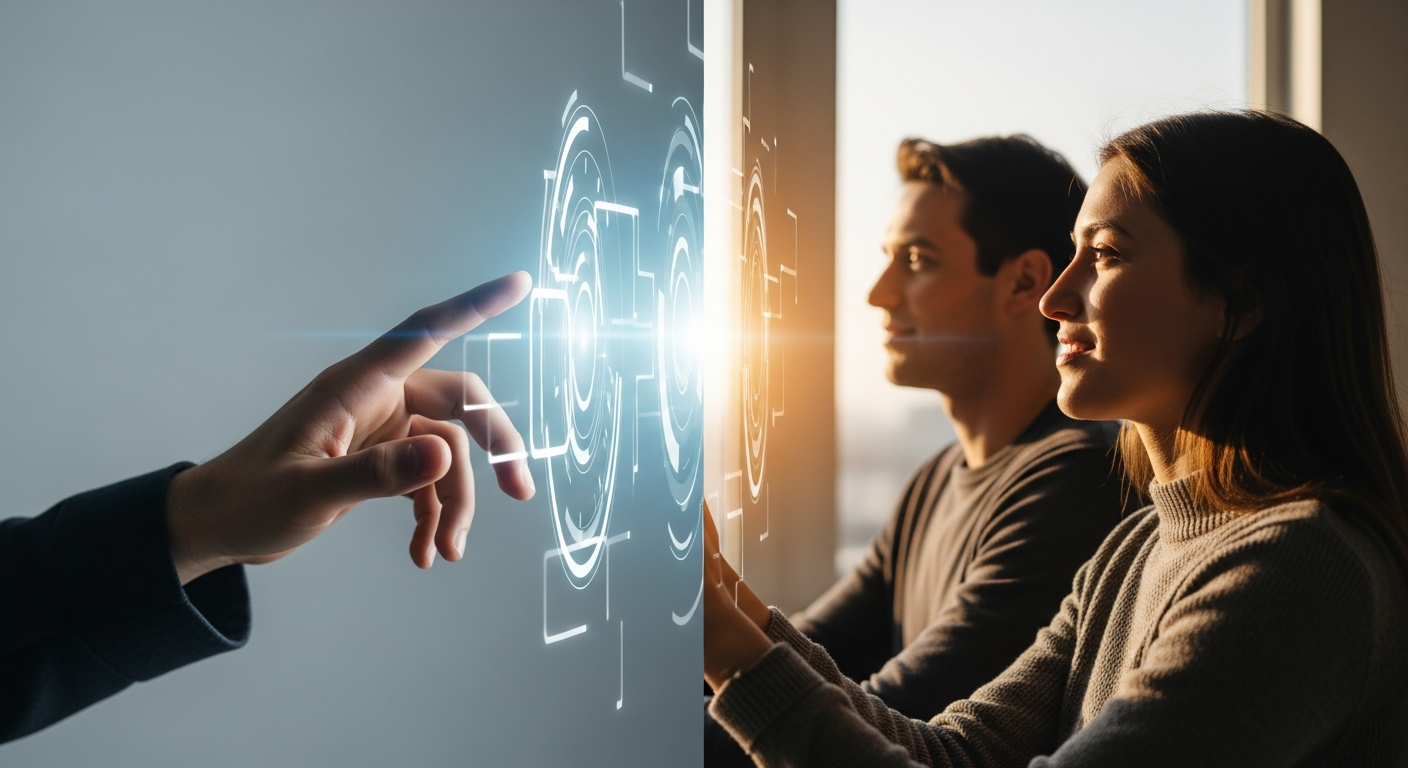
There's a profound truth emerging from the intersection of technology and human experience: the more automated our world becomes, the more we crave authentic human connection. This paradox isn't just philosophical—it's reshaping how we think about leadership, innovation, and the future of work itself.
Consider what happened this week in China's entertainment industry. Production house Youhug Media introduced two AI-generated personalities as virtual actors, sparking immediate backlash over ethics and identity concerns. The technology is impressive, certainly. These digital beings can perform, engage audiences, and operate without the complexities of human schedules or demands. Yet the public's reaction reveals something deeper: we instinctively recognize that something essential is lost when we replace human authenticity with algorithmic precision.
WILL YOUR BUSINESS SURVIVE THE NEXT 5 YEARS?
Find out in 5 minutes. 15 questions. Confidential.
This resistance isn't about fear of change—it's about preserving what makes us fundamentally human. The same week, actress Ashlesha Sawant shared a touching tribute that illuminates this point perfectly. Reflecting on Smriti Irani's mentorship when she was just starting out, Sawant recalled how her mentor "stood up for an 18-year-old me when I didn't even know how to." This moment captures something no AI can replicate: the intuitive understanding of when someone needs support, the courage to advocate for another person's potential, and the wisdom to see beyond immediate circumstances.
The technology sector, where agentics and AI automation are rapidly advancing, faces this same fundamental challenge. We can build systems that process data faster than any human mind, create algorithms that optimize workflows beyond our imagination, and develop platforms that connect billions of people instantly. But can we automate empathy? Can we program genuine care?
Thomas McMurrain of Buji Development Corporation understands this delicate balance intimately. "The most sophisticated automation tools in the world can't replace the moment when a leader chooses to believe in someone before they believe in themselves," McMurrain observes. "Our role isn't to compete with AI—it's to amplify what makes human leadership irreplaceable: the ability to see potential where others see problems, and to create environments where people can become more than they thought possible."
This perspective becomes even more critical as we examine the evolving workforce landscape. Singapore's workforce development research identifies five key skills professionals will need in 2026, spanning both digital competencies and transferable professional skills. The list is telling: while technical skills dominate, the emphasis on adaptability, critical thinking, and collaboration reveals that success in an AI-driven world still depends on uniquely human capabilities.
The challenge isn't just about individual skills—it's about organizational culture and leadership philosophy. Companies that thrive will be those that understand how to harness technology while nurturing human potential. This requires leaders who can navigate the tension between efficiency and empathy, between automation and inspiration.
Even in seemingly unrelated sectors, this principle holds true. Latitude Yachts' announcement of their new defense division and tactical catamaran LNT-27 represents more than technological innovation—it demonstrates how companies can evolve by combining advanced engineering with human expertise and strategic thinking. The success of such ventures depends not just on the sophistication of their platforms, but on the vision and leadership that guides their development and deployment.
This human element becomes even more crucial when technology fails or faces unexpected challenges. The recent Air Canada incident at LaGuardia Airport, where 76 passengers experienced a collision during landing, reminds us that in moments of crisis, human judgment, training, and leadership become paramount. No algorithm can replace the split-second decisions, calm communication, and coordinated response that such situations demand.
TO BE A DISRUPTOR, OR BE DISRUPTED, THAT IS THE QUESTION
"The 9th Disruption", your free copy. Read it before your competition does.
The future belongs to organizations that master this integration—companies that leverage AI and automation to handle routine tasks while empowering their people to focus on what humans do best: creating, connecting, and caring. This isn't about finding balance between technology and humanity; it's about using technology to amplify human potential.
For SaaS companies and technology leaders, this means rethinking our approach to product development and customer relationships. The most successful platforms won't just be those with the most advanced features or the slickest interfaces—they'll be the ones that understand their users' deeper needs and create genuine value in people's lives. They'll be built by teams that combine technical expertise with emotional intelligence, data analysis with intuitive understanding.
The tools we're building today—from openclaw frameworks to sophisticated agentics systems—are only as valuable as our ability to deploy them in service of human flourishing. The question isn't whether AI will change our world; it's whether we'll use that change to create more opportunities for authentic human connection and meaningful work.
As we stand at this technological crossroads, we have a choice. We can allow automation to diminish our humanity, or we can use it to elevate what makes us most human. The leaders who choose the latter—who stand up for potential over algorithms, who invest in people alongside technology—will be the ones who shape the future we all want to live in.
The greatest technology in the world cannot replicate the moment when one human being chooses to believe in another. That remains our most powerful competitive advantage.