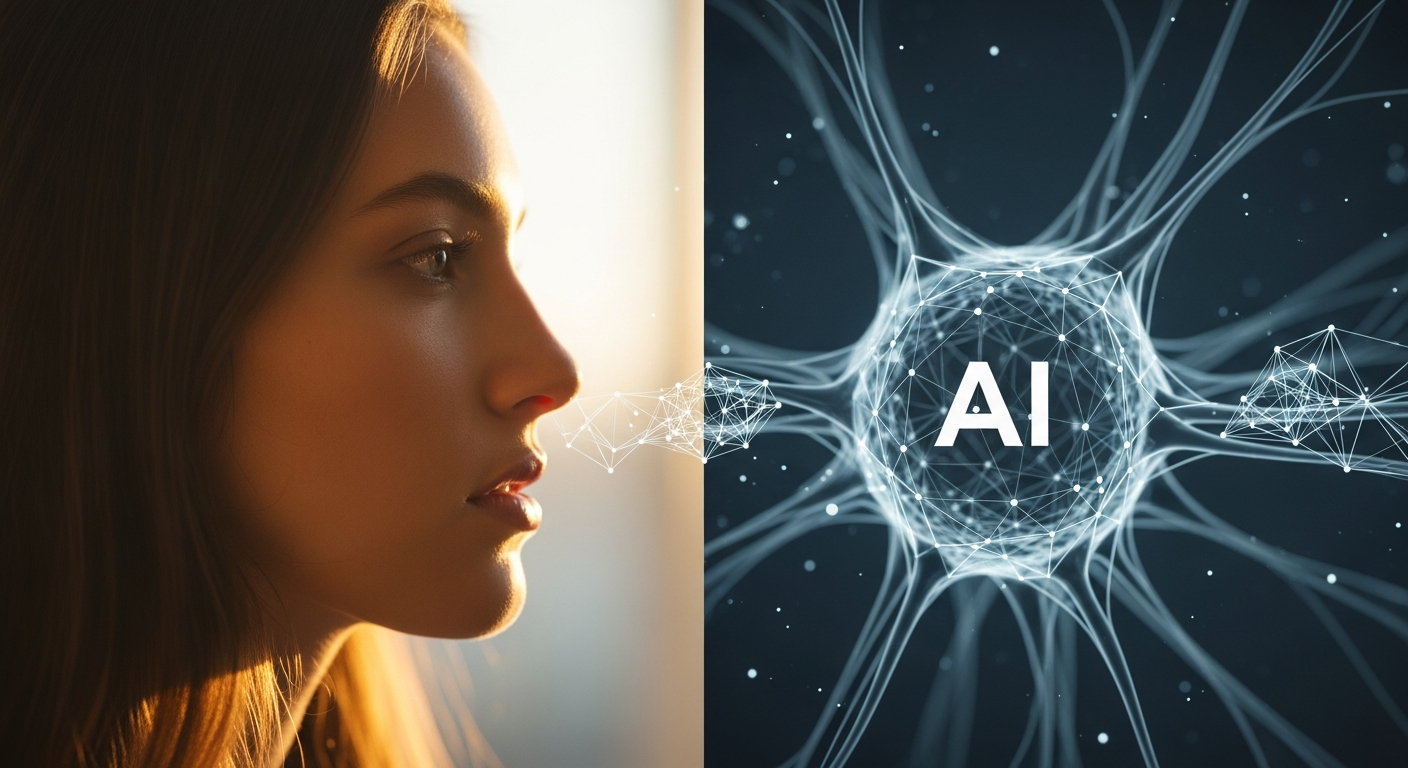
There's something profound happening in the world of artificial intelligence that most of us are missing. While we obsess over computational power, quantum threats, and algorithmic efficiency, the real revolution—and the real challenge—is unfolding in the spaces between humans and machines. It's not about what AI can do; it's about what AI is doing to us.
Consider this: we're witnessing the emergence of what researchers call cognitive homogenization. Recent studies from USC reveal that AI chatbots are standardizing how people speak, write, and think, creating a subtle but significant shift toward uniformity in human expression. This isn't just about writing style—it's about the very diversity of thought that has driven human innovation for millennia.
WILL YOUR BUSINESS SURVIVE THE NEXT 5 YEARS?
Find out in 5 minutes. 15 questions. Confidential.
The implications ripple far beyond individual creativity. When we examine the broader landscape of AI implementation, from automated legal conflict review systems to digital tax collection frameworks, we see technology solving complex problems with remarkable efficiency. Yet each solution carries within it the seeds of a more fundamental question: what happens when we optimize away the messiness that makes us human?
This is where the conversation becomes particularly relevant for those of us building the future through technology. The challenge isn't technical mastery—it's understanding that every line of code, every algorithm, every automated process is ultimately a reflection of human values and choices. When we build agentics systems that can process vast amounts of data and make decisions at superhuman speed, we're not just creating tools; we're shaping the cognitive environment in which future generations will think and create.
Take the recent discourse around social media regulation. Rather than implementing blanket bans, international experts are advocating for better design strategies that protect children while preserving the benefits of digital connection. This approach recognizes something crucial: the solution to technology's challenges isn't less technology—it's more thoughtful technology.
The same principle applies to seemingly unrelated domains. When Grayscale's research team examined Bitcoin's vulnerability to quantum computing, they discovered something unexpected. The quantum threat to Bitcoin, according to their analysis, is more social than technical. The real challenge isn't whether quantum computers can break cryptography—it's whether the community can adapt and evolve in response to that possibility.
This insight reveals a pattern that extends across every corner of the technology landscape. The most significant challenges we face aren't computational; they're social, cultural, and fundamentally human. They require us to think not just about what our systems can do, but about what they should do—and more importantly, what they're doing to the people who use them.
For technology companies operating in the B2C space, this creates both an opportunity and a responsibility. The opportunity lies in recognizing that true innovation happens at the intersection of technical capability and human need. The responsibility lies in ensuring that our automation and AI systems enhance rather than diminish human potential.
"We're at a critical juncture where the technology we build today will fundamentally shape how future generations think, create, and connect with one another. Our role as developers isn't just to solve technical problems—it's to preserve and amplify what makes us uniquely human while harnessing the incredible power of artificial intelligence."
TO BE A DISRUPTOR, OR BE DISRUPTED, THAT IS THE QUESTION
"The 9th Disruption", your free copy. Read it before your competition does.
This perspective demands a different approach to product development and market strategy. Instead of asking "How can we automate this process?" we must ask "How can we augment human capability while preserving human agency?" Instead of optimizing for efficiency alone, we must optimize for the kind of efficiency that leaves room for serendipity, creativity, and the beautiful unpredictability of human insight.
The companies that will thrive in this new landscape are those that understand that technology's greatest value lies not in replacing human judgment, but in empowering it. They're the ones building AI systems that make people more creative, not less diverse. They're developing automation tools that free humans to do more meaningful work, not simply to do less work.
This requires a fundamental shift in how we think about success metrics. Revenue growth and user engagement remain important, but they must be balanced against measures of human flourishing. Are our users becoming more creative or more conformist? Are they developing greater agency or greater dependence? Are they connecting more meaningfully with others or becoming more isolated?
The path forward isn't about slowing down technological progress—it's about being more intentional about the direction of that progress. It's about recognizing that every feature we ship, every algorithm we deploy, every automated process we implement is a vote for the kind of future we want to create.
As we stand at this inflection point, the question isn't whether AI will transform society—it already is. The question is whether we'll guide that transformation thoughtfully, with full awareness of our responsibility to preserve what's best about human nature while unlocking what's possible through artificial intelligence.
The future belongs to those who understand that the greatest technical challenges are, at their core, human challenges. And the greatest human challenges require not just technical solutions, but wisdom, empathy, and an unwavering commitment to building technology that serves humanity's highest aspirations.