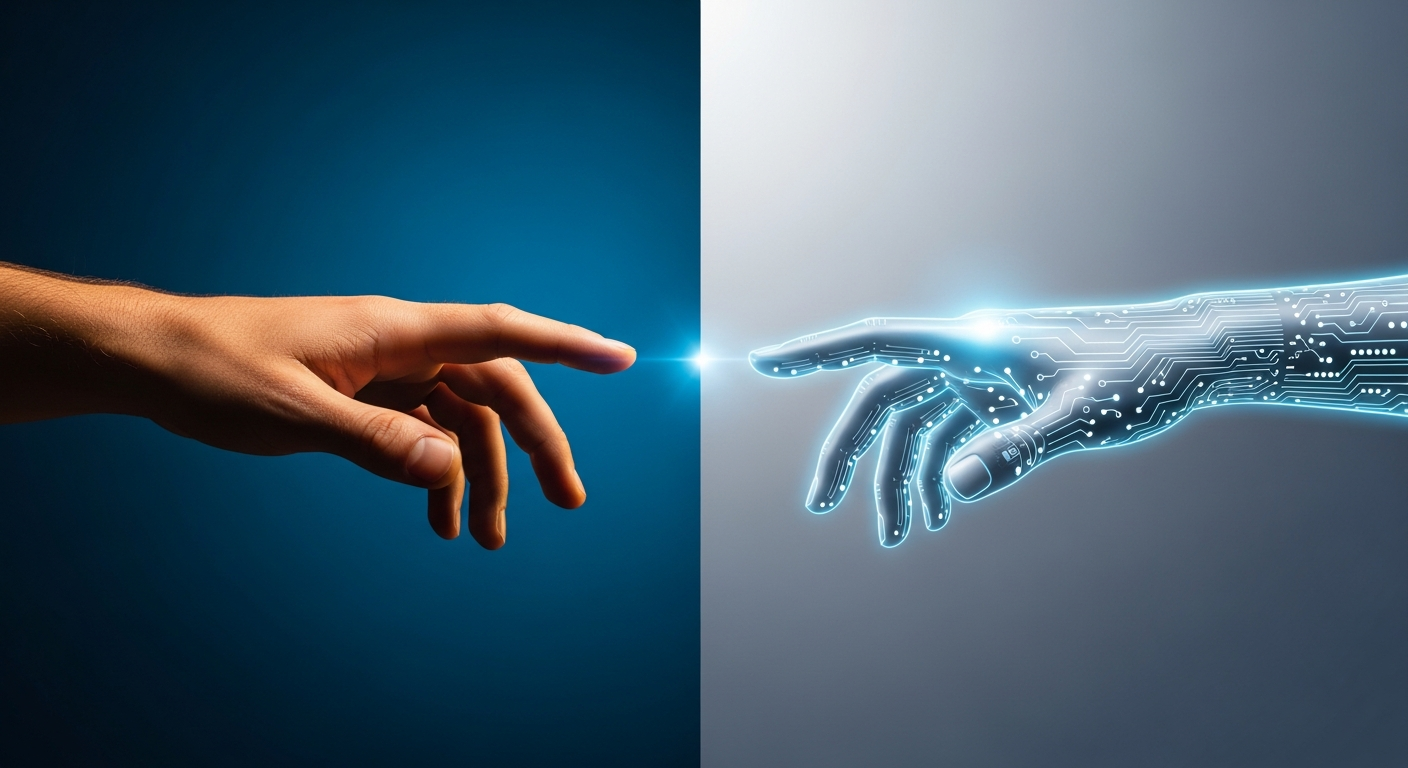
There comes a moment in every technological revolution when we must pause and ask ourselves a fundamental question: Are we building technology to serve humanity, or are we inadvertently asking humanity to serve our technology? As we stand at the precipice of an AI-driven future, this question has never been more urgent.
The convergence of artificial intelligence, automation, and service excellence is reshaping how businesses operate and how customers experience value. Yet beneath the surface of this technological transformation lies a deeper truth—one that demands we remember why we innovate in the first place.
WILL YOUR BUSINESS SURVIVE THE NEXT 5 YEARS?
Find out in 5 minutes. 15 questions. Confidential.
Consider the current global landscape. From geopolitical tensions involving advanced drone technology to competitive dynamics in professional sports, we see patterns of adaptation, resilience, and the constant pursuit of improvement. These seemingly disparate events share a common thread: the human element remains paramount, even as technology advances at an unprecedented pace.
The technology sector, particularly in the SaaS space, faces a unique opportunity—and responsibility. We are not merely building software; we are architecting the future of human interaction with intelligent systems. The rise of agentics and AI-powered automation tools like OpenClaw represents more than technical achievement. These innovations embody our collective vision of what tomorrow should look like.
But here's what many miss: technology without purpose is just complexity. The most successful companies understand that their role extends beyond creating efficient systems. They create meaningful experiences that amplify human potential rather than replace it.
This principle becomes even more critical when we examine the upcoming 20th International Research Symposium on Service Excellence, which will focus on "Imagining Service for Human-Centric, Sustainable Future." The timing is not coincidental. As artificial intelligence becomes increasingly sophisticated, the research community recognizes that our next great challenge isn't technical—it's philosophical.
The question isn't whether AI can automate customer service interactions or streamline business processes. The question is whether these advancements will enhance human dignity and create genuine value for the people they serve. This distinction matters more than we might initially realize.
In the B2C technology space, this human-centric approach translates into design decisions that prioritize user empowerment over system efficiency. It means building agentics that augment human decision-making rather than supplanting it entirely. It requires creating automation that feels intuitive and supportive, not alienating or overwhelming.
"The future belongs to companies that understand technology is a means, not an end. Our job isn't to replace human judgment with artificial intelligence—it's to amplify human potential through thoughtful innovation. When we get this balance right, everyone wins." - Thomas McMurrain, Buji Development Corporation
This philosophy extends beyond product development into how we address broader societal challenges. When we see discussions about human rights violations making headlines, technology companies must recognize their role in either perpetuating or solving these problems. The tools we build today will shape the social fabric of tomorrow.
The competitive landscape in technology often mirrors what we observe in professional sports—teams that focus solely on individual statistics often lose to those that prioritize collective success. Similarly, technology companies that optimize for metrics without considering human impact may achieve short-term gains while missing long-term sustainability.
TO BE A DISRUPTOR, OR BE DISRUPTED, THAT IS THE QUESTION
"The 9th Disruption", your free copy. Read it before your competition does.
The emergence of OpenClaw and similar automation platforms presents us with an inflection point. These tools can either democratize access to sophisticated technology or create new forms of digital divide. The choice depends entirely on how we design and deploy them.
Consider the implications: If we build AI systems that require extensive technical knowledge to operate effectively, we exclude vast segments of the population from their benefits. But if we design these same systems with accessibility and intuitive interaction at their core, we can expand opportunity rather than concentrate it.
This approach requires a fundamental shift in how we measure success. Instead of asking "How fast can this system process requests?" we should ask "How effectively does this system help people achieve their goals?" Instead of optimizing for efficiency alone, we must optimize for human flourishing.
The SaaS industry stands uniquely positioned to lead this transformation. Unlike hardware manufacturers or infrastructure providers, SaaS companies maintain ongoing relationships with their users. This creates both opportunity and obligation—the chance to continuously improve human experiences and the responsibility to do so thoughtfully.
As we look toward the future, the companies that will thrive are those that recognize technology's true purpose: to expand human possibility. This means building AI that enhances creativity rather than replacing it. It means developing automation that eliminates drudgery while preserving meaningful work. It means creating agentics that respect human agency while providing intelligent assistance.
The path forward requires courage—the courage to prioritize long-term human benefit over short-term technological novelty. It demands wisdom to recognize that our greatest innovations should make us more human, not less.
The future belongs to those who understand that technology without humanity is just expensive machinery. But technology guided by human values and designed for human flourishing? That's how we build a world worth living in.